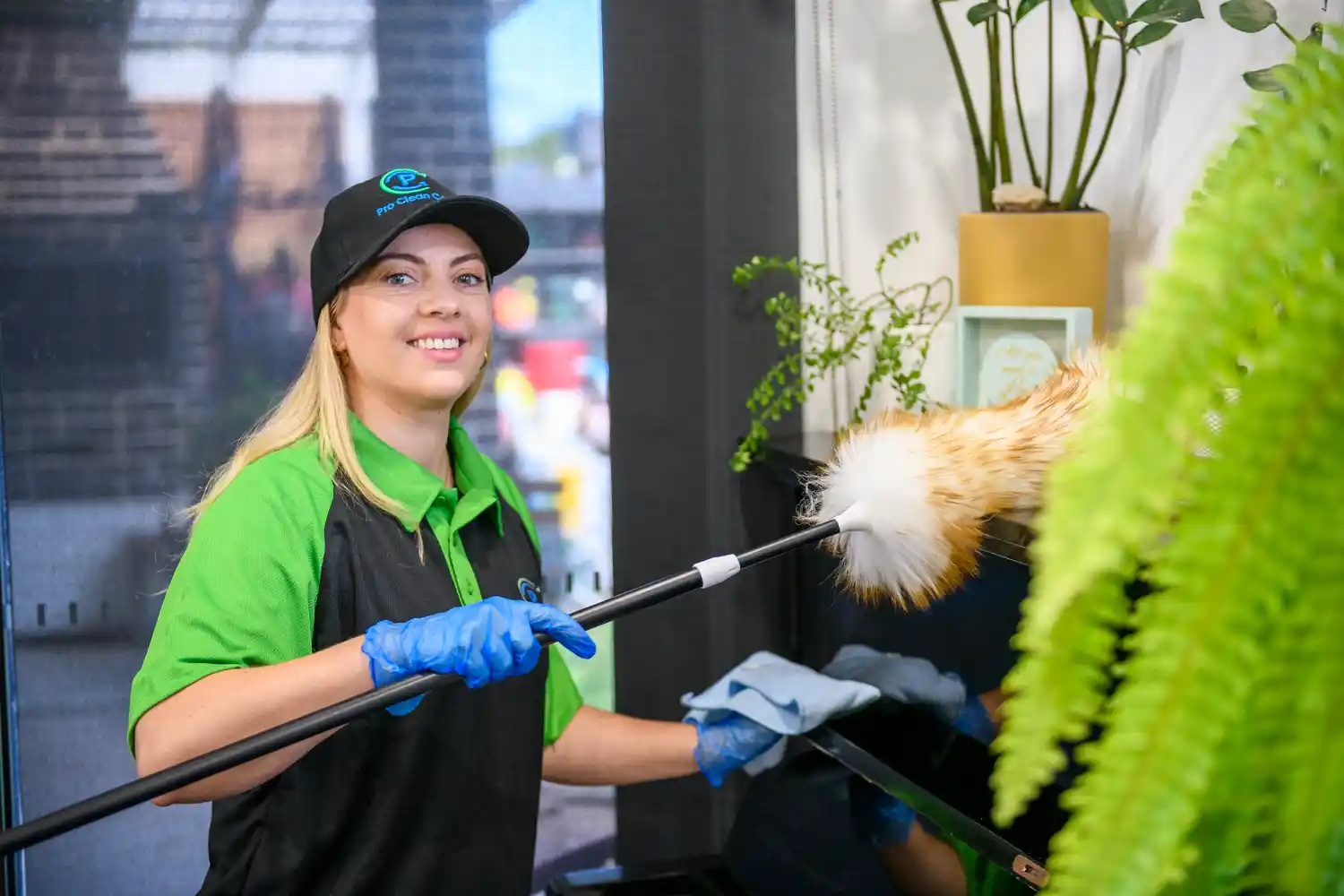
Hair salons, beauty clinics, nail bars, barbers and day spas. Hair cleared from under the chairs rather than around them, wash bays and colour bars kept free of staining, wax and acrylic residue handled properly, treatment rooms reset. After-hours crews, police-checked and directly employed.
Salon and spa cleaning covers cutting floors and chair bases, wash bays, colour bars, treatment rooms, wax and nail stations, retail frontage and bathrooms. Ongoing schedules in Sydney generally run between $30 and $45 per hour, deep cleans between $40 and $50. Work is done outside trading, never around clients.
A salon client spends between forty minutes and three hours in one chair, usually facing a mirror, with nothing to do but look. That is a longer, closer inspection than any other retail environment gets. They see the hair under the neighbouring station, the colour splash on the skirting, the dust on top of the mirror frame, the smear on the glass shelf and the state of the trolley beside them. In a business built entirely on how things look, those details are not cosmetic problems, they are commercial ones.
Hair is the defining difficulty and it is genuinely hard to deal with. Cut hair is light, holds static and migrates. It goes under the styling units and into the gap behind them, into chair bases and castors, along skirting joints, into the floor edge under the wash bay, and into trolley drawers. A crew that sweeps the open floor collects perhaps two thirds of it and leaves the visible third exactly where a client is looking. Doing it properly means moving chairs and trolleys, getting into the edges, and using a vacuum with the right head rather than a broom that redistributes it.
Colour is the second problem and it is unforgiving of delay. Tint, bleach and toner stain benchtops, basins, vinyl floors and particularly grout, and once set the mark is very difficult to lift without damaging the surface. The colour bar, the wash bay basins and the floor beneath them need attention on every visit, not on a weekly cycle, because a stain that is two days old is a different job from one that is two hours old.
Fixed price per visit after a site visit. Month to month with 30 days written notice, no lock-in.
1300 494 983Enquire OnlineThe wash bay is the wettest, most product-heavy square metre in the building and it is almost always under-scoped. Basins collect a residue of shampoo, conditioner and colour that films the ceramic and dulls the finish. Hoses and spray heads scale up in Sydney water and grow a slime in the fitting where they connect. The floor beneath and behind the basins collects hair and standing water that nobody sees because it is under a fixed unit. Chair upholstery in the bay takes constant moisture and needs a product that will not crack the vinyl.
Drains are the associated problem. Hair and product combine into a mass that slows the waste run and produces an odour long before it produces a blockage. Regular clearing of the basin trap area and the floor waste, where the salon has one, prevents a plumbing callout during trading hours. It also removes the faint drain smell that clients notice and never mention to the owner.
Day spas add genuine wet areas: steam rooms, saunas, spa baths, wet tables and shower rooms. Those are humid, warm and constantly damp, which makes them the most mould-prone spaces in any Sydney commercial fit-out. They need grout and seal attention, ventilation checks, and a cleaning method that dries surfaces rather than leaving them wet at close. A spa that smells musty at nine in the morning has a ventilation and cleaning schedule problem, not a fragrance problem.
Beauty and cosmetic clinics sit closer to a clinical environment than a retail one, and the cleaning scope should reflect that. Treatment rooms need the bed, the trolley, the lamp and arm, the equipment surfaces and all touch points cleaned between clients by salon staff, with a full room clean at close covering floors, skirting, under the bed, the sink area and any splash zone. Rooms that use oils and waxes accumulate a film on the floor and the trolley that is easy to miss and unpleasant when found.
Where a premises offers skin penetration services, the regulatory picture changes. In NSW, premises providing procedures such as tattooing, cosmetic tattooing, piercing and certain beauty treatments must be notified to the local council and are inspected against hygiene standards covering surfaces, cleaning, waste handling and instrument reprocessing. Cleaning covers the environmental half of that: hard, non-porous, cleanable surfaces actually kept clean, correct waste segregation including sharps containers handled by the appropriate contractor, and a schedule the operator can show an inspector. Instrument sterilisation stays with the salon.
Nail bars have their own specific problem in acrylic dust and monomer residue. The dust is fine, it travels well beyond the station, and it settles on shelving, skirting, extraction units and the floor across the whole room. Extraction filters and the surfaces around them need regular attention or the room develops a persistent chemical smell that clients associate with the venue rather than the product. Clinics that operate alongside allied health services usually align the scope with our allied health clinic cleaning.
Salons live and die on walk-past and on how they photograph. The front glazing, the entry mat, the reception counter and the retail shelving are the marketing assets, and they degrade fastest. Glass takes hand marks and street film continuously, especially on the strip locations salons favour along Oxford Street, Crown Street, King Street Newtown, Military Road and the Bondi and Double Bay retail runs. Retail product shelving gathers dust between the bottles, which is very visible under salon lighting and reads as stock that is not selling.
Soft furnishings in the waiting area, the magazines, the water station and the coffee machine are the other front-of-house items that quietly slide. They are small tasks individually, which is exactly why they fall off an unwritten scope and end up done by whoever notices. Naming them with a frequency solves it permanently and costs almost nothing.
Salons inside shopping centres have a different frontage problem: centre access hours, a shared dock for waste, and a landlord standard for the shopfront line. Those constraints get built into the schedule at quoting stage. Salons on a strip usually add periodic external work, and shopfront glazing goes on the same round as our window cleaning service, with entry paving handled through high pressure cleaning where the venue holds the frontage.
Salons close late and open early, and the staff who close are usually the ones who have been standing for nine hours. Expecting them to do a proper clean at the end of that is how salons end up with the build-up in the edges. A contracted clean after close or before opening removes the task from the team entirely and produces a consistent result, which matters more in a business where the standard should not depend on who was rostered.
Access arrangements are set up before the first visit so no staff member has to wait back or come in early. Because crews work alone in a closed premises holding stock, retail product and client records, everyone on a salon site is a directly employed, police-checked Pro Clean Corp staff member rather than a subcontractor, and a signed attendance record is left each visit.
Periodic work is scheduled alongside the routine visits: hard floor deep cleaning or strip and seal on vinyl, grout restoration around wash bays and bathrooms, upholstery and soft furnishing cleaning on waiting chairs and treatment beds, high dusting of light fittings and the tops of mirror frames and shelving, and internal glazing. Building it into the calendar means a salon never faces a large unplanned bill before a busy season. Call 1300 494 983 or enquire online to book a walkthrough.
A hair salon scope covers the cutting floor and the hair that collects under and behind every chair, the styling stations and mirrors, the wash bay basins, taps, hoses and the floor beneath them, the colour bar and its bench, sink and splashback, reception and the retail shelving, the staff room and dispensary, bathrooms, and the front glazing. Beauty and day spa scopes shift to treatment rooms, beds and trolleys, wax pot areas, product shelving, robes and linen handling areas, and any wet area such as a steam room or spa.
Ongoing salon cleaning in Sydney generally runs between $30 and $45 per hour under a regular schedule, and one-off or deep cleans between $40 and $50 per hour. Most salons are quoted as a fixed price per visit rather than hourly, because the workload is driven by station count, floor surface and whether the site has wash bays and treatment rooms rather than by floor area alone. We quote after walking the venue.
Cut hair is light, static-prone and gets everywhere. It drifts under the styling units, into the gap between the unit and the wall, into castors and chair bases, into skirting joints and floor edges, and into the trolley drawers. A daily sweep collects what is on the open floor and leaves the rest, which is why salons that look clean at eye level still have visible build-up when a chair is moved. Proper salon cleaning means moving chairs and trolleys and clearing the edges, not just the middle of the floor.
Yes, and each needs a different approach. Hair colour stains benchtops, basins, floors and grout, and it sets fast, so the colour bar and the wash bay need attention on every visit rather than weekly. Wax builds up on pot exteriors, trolley surfaces and floors around the treatment bed and needs a solvent-appropriate method rather than scrubbing. Nail work leaves acrylic dust and monomer residue on benches, extraction units and the floor around each station, and that dust travels much further than most operators expect.
Skin penetration procedures such as tattooing, piercing, cosmetic tattooing and some beauty treatments are regulated in NSW, and premises offering them must be notified to the local council and are inspected against hygiene requirements covering surfaces, cleaning, waste and equipment reprocessing. Even where a salon offers no skin penetration services, councils respond to complaints about premises hygiene. Cleaning contributes the environmental side of that, but equipment reprocessing and sterilisation remain the salon own responsibility.
Almost always outside trading. Most Sydney salons close in the early evening on weekdays and late afternoon on weekends, and cleaning runs after close or before opening. Day spas often prefer a pre-open clean so the space is fresh and warm for the first booking. Salons in shopping centres work to centre access hours and often need the clean finished before the centre opens. Whatever the window, we do not clean around clients, because a treatment or a colour service should not be shared with a vacuum.
A consistent standard that does not depend on who closed last night. After-hours crews, fixed price per visit, no lock-in contract.